
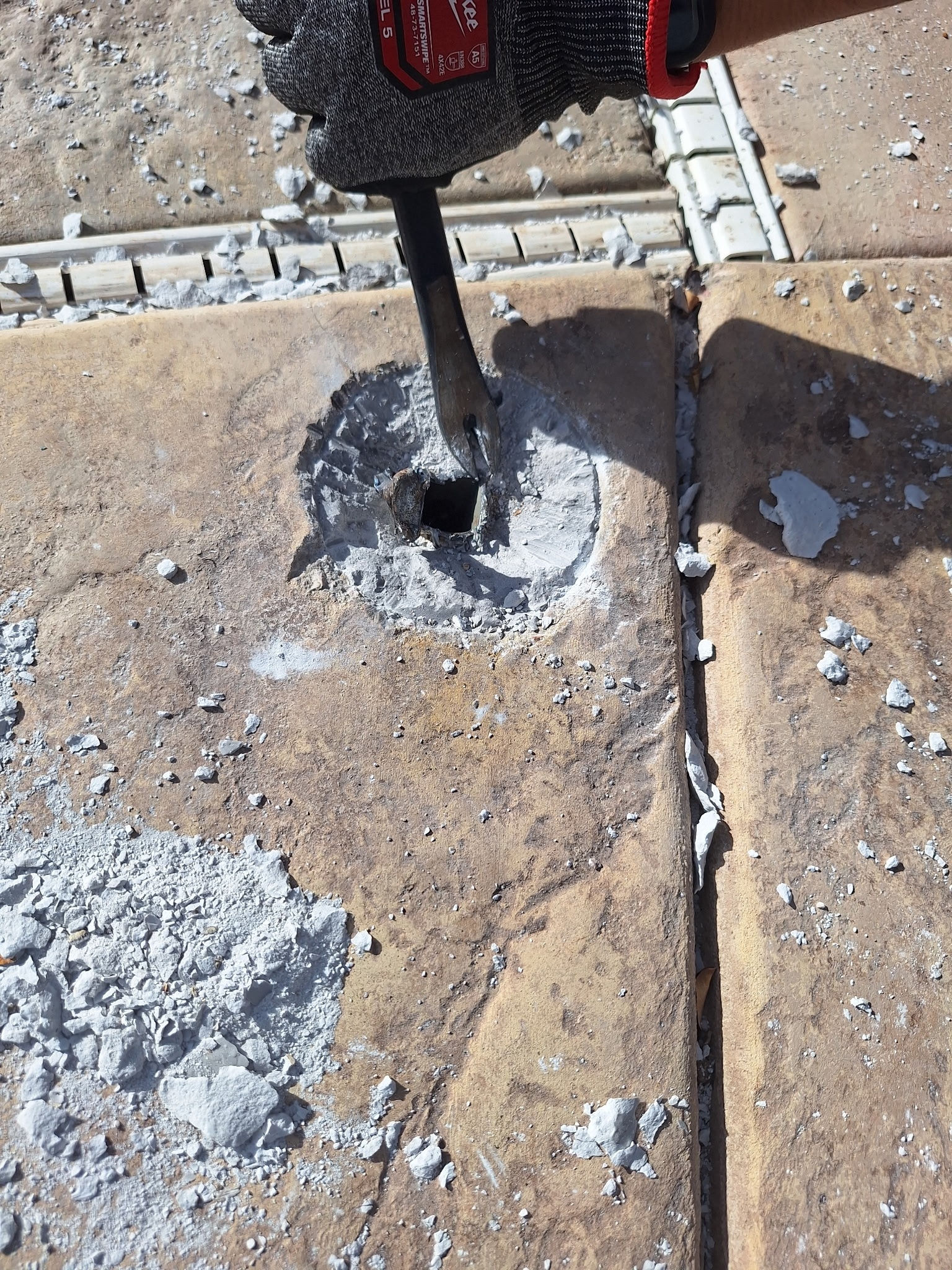
In Las Vegas, a lot of fence and gate trouble starts underground. The valley’s native soils are shallow, carbonate-heavy alluvium with petrocalcic caliche layers, and the City’s own landscaping guidance warns that irrigation and runoff near walls can contribute to settling and expansion/contraction issues.
What that means in plain English is this: water does not always soak in gently here. It tends to run, concentrate, and work one side of a post or wall line harder than the other. Then heat and wind take over. A gate that is even slightly out of plumb starts loading the hinge side unevenly, latch geometry drifts, and the homeowner starts doing that little “lift-and-shove” move every time they close it. The higher-ticket jobs usually show up when the problem is not just hardware anymore, but post movement + fence-line drift + gate tuning as one connected system. We see this a lot around Vegas, and the durable fix is almost never “just throw on a new latch.”
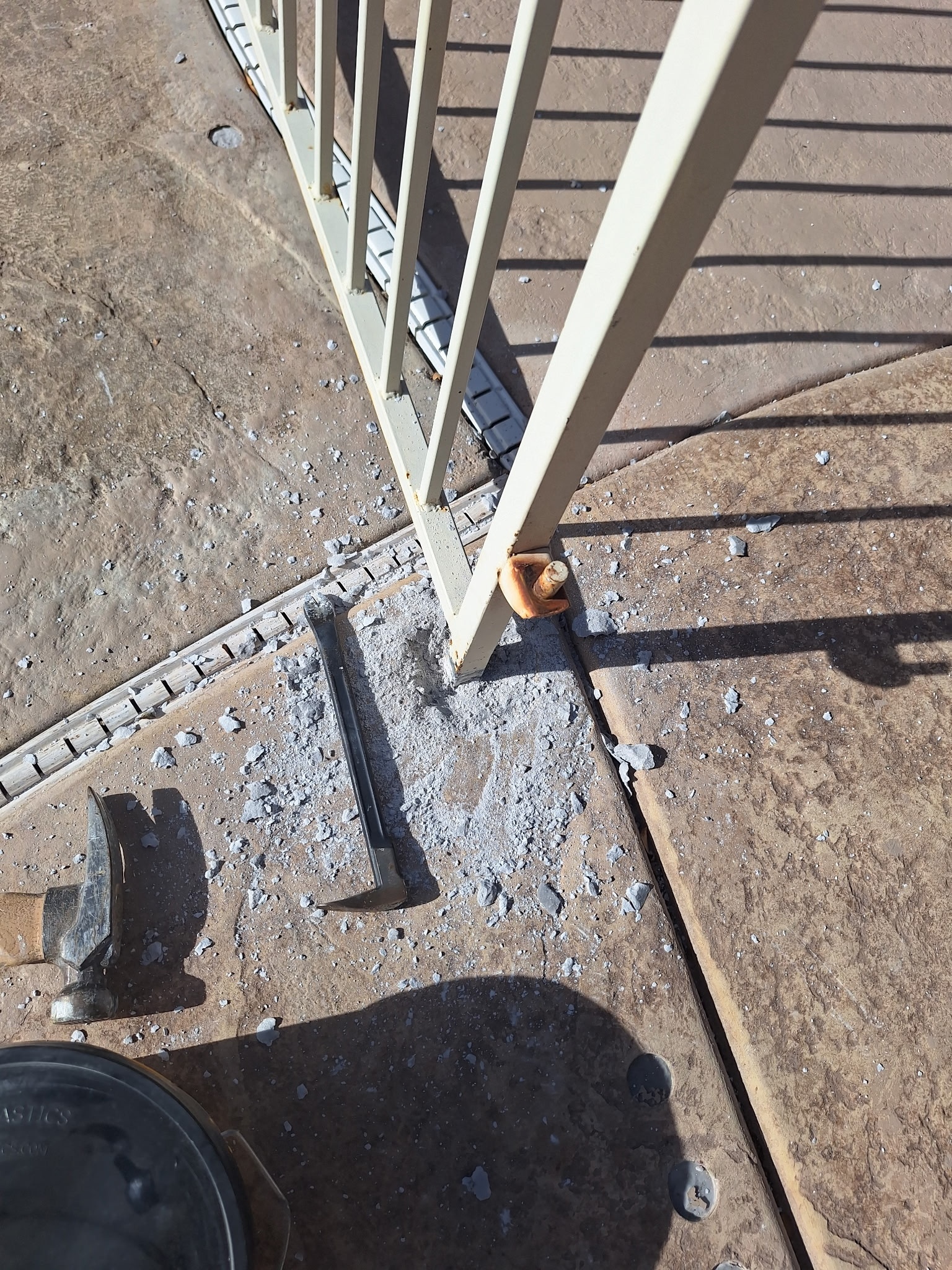
Here’s how that failure pattern usually shows up in the field.
Typical Local Pricing Guide
Guide pricing, not a quote| Technical symptom | What it usually means | When it becomes a bigger job |
|---|---|---|
| Gate drags low at latch side | Hinge-side support is no longer true | Post reset + gate rebuild |
| Latch misses by a little more each month | Ongoing geometry drift | Full gate/fence correction package |
| Fence line looks “wavy” from one angle | Multiple supports moving differently | Section rebuild, not spot repair |
| Hardware keeps loosening | Load path is wrong, not just screws | Reinforcement + alignment work |
| One corner floods during storms | Runoff is feeding movement | Water-control correction + rebuild |
The prices provided are intended as general guidance only, as every job is different and actual costs may vary. We recommend obtaining a detailed estimate before setting your project budget. For accurate pricing, please reach out to us and we will create a custom estimate for your project.
In Vegas, gates usually do not fail out of nowhere. The soil, the water pattern, and the wind have been arguing with that post for a while before the latch ever stops catching.


