
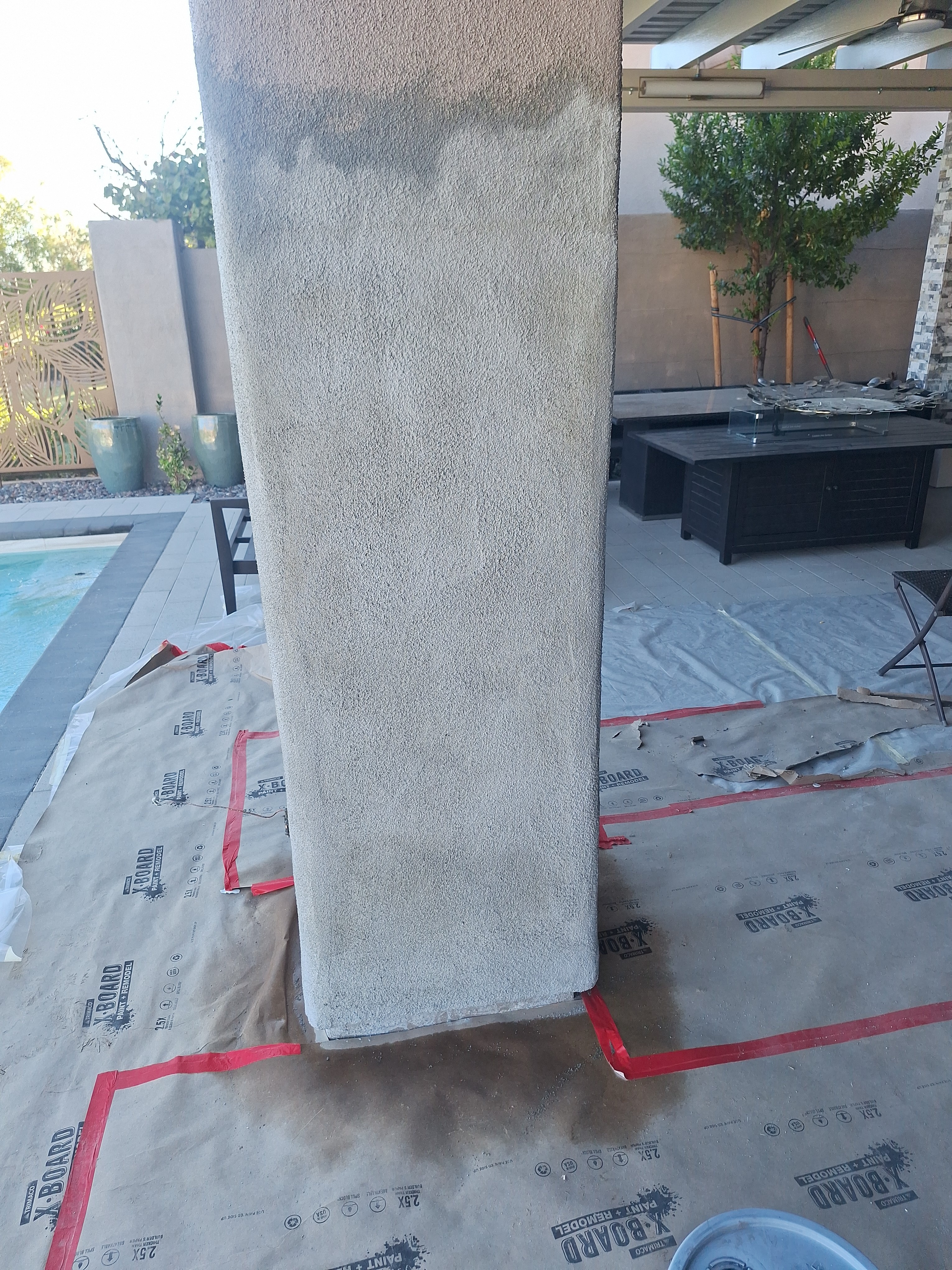
In Las Vegas, the bottom edge of a stucco wall often tells the real story. The City’s own landscape guidance requires irrigation systems to eliminate runoff into public rights-of-way, retain water on-site, and keep overhead spray at least 24 inches back from buildings and solid walls because overspray and soil movement can damage structures.
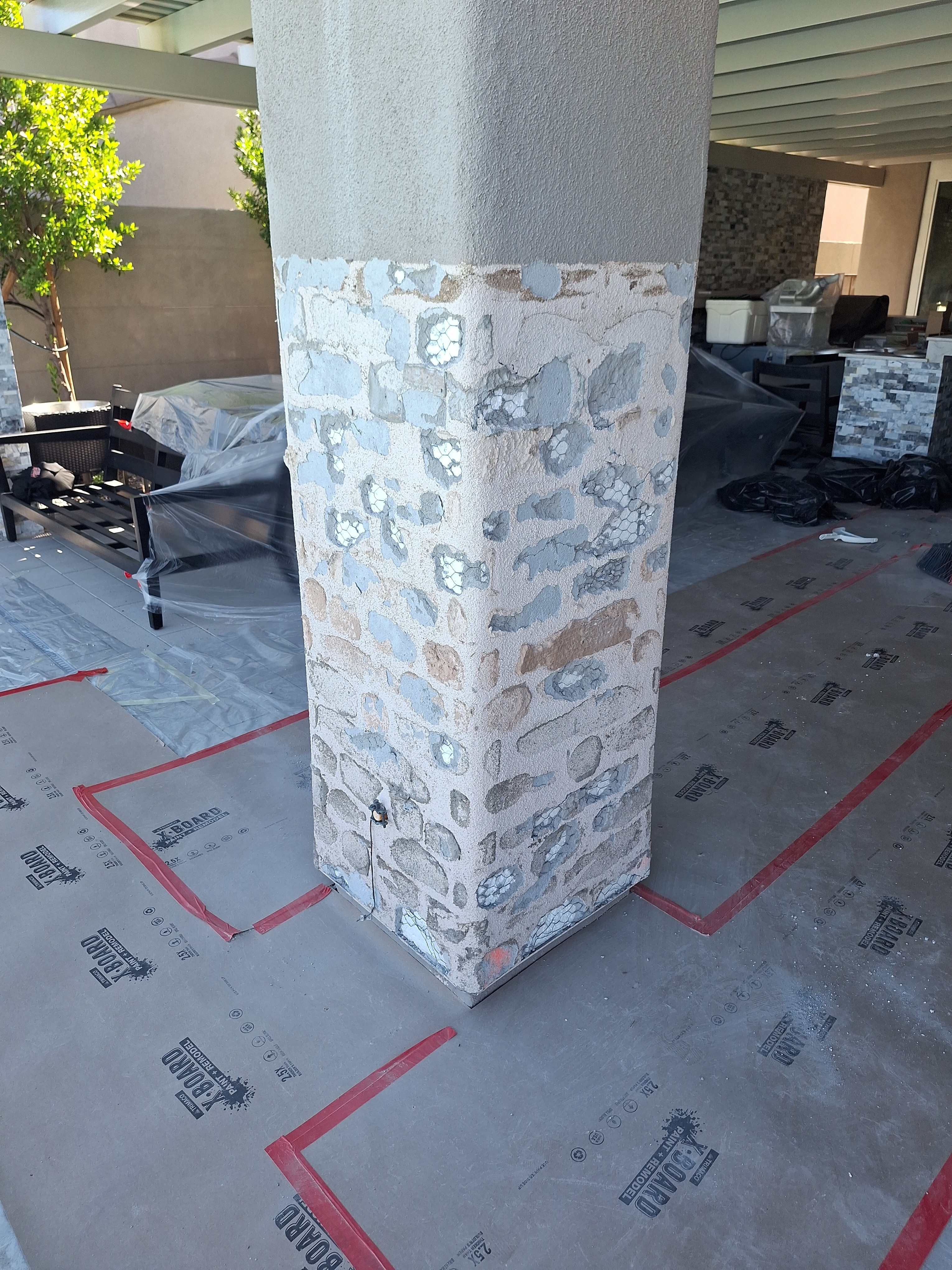
That matters because lower-wall staining is usually not a “stucco problem” first. It is a water-path problem. When discharge dumps too close, when sprinklers hit the wall, or when runoff repeatedly splashes the same zone, the lower finish gets hit over and over. Add monsoon downpours and the Valley’s flash-flood pattern, and the weak spots show up quickly as staining, efflorescence-looking residue, damp trim ends, or softened material near transitions. The higher-ticket scopes come when that lower-wall pattern has already fed trim damage, seal failure, or interior staining nearby. Once that happens, repainting is just makeup.
Here is how we usually break that down.
Typical Local Pricing Guide
Guide pricing, not a quote| Technical symptom | What it usually means | When it becomes a bigger job |
|---|---|---|
| Repeating stain band near slab | Water is splashing the same zone repeatedly | Water-control + finish correction package |
| Soft trim at adjacent corner | Stucco issue is feeding wood failure | Exterior rebuild scope |
| Dark streaking after storms | Discharge/splash-back is still active | Drainage correction first |
| Patchy lower repaint failure | Surface was coated without fixing moisture pattern | Rebuild + reseal + finish prep |
| Interior spot behind same wall | Exterior path has crossed indoors | Exterior/interior linked repair |
The prices provided are intended as general guidance only, as every job is different and actual costs may vary. We recommend obtaining a detailed estimate before setting your project budget. For accurate pricing, please reach out to us and we will create a custom estimate for your project.
Around Vegas, the bottom foot of the wall usually snitches first. If the splash pattern stays, the stain comes back.


