
or text us at (901) 657-5171
Deck Board Replacement in Memphis: A Practical Guide to Prevent Early Rot
Local Handyman Mid-South
January 28, 2025
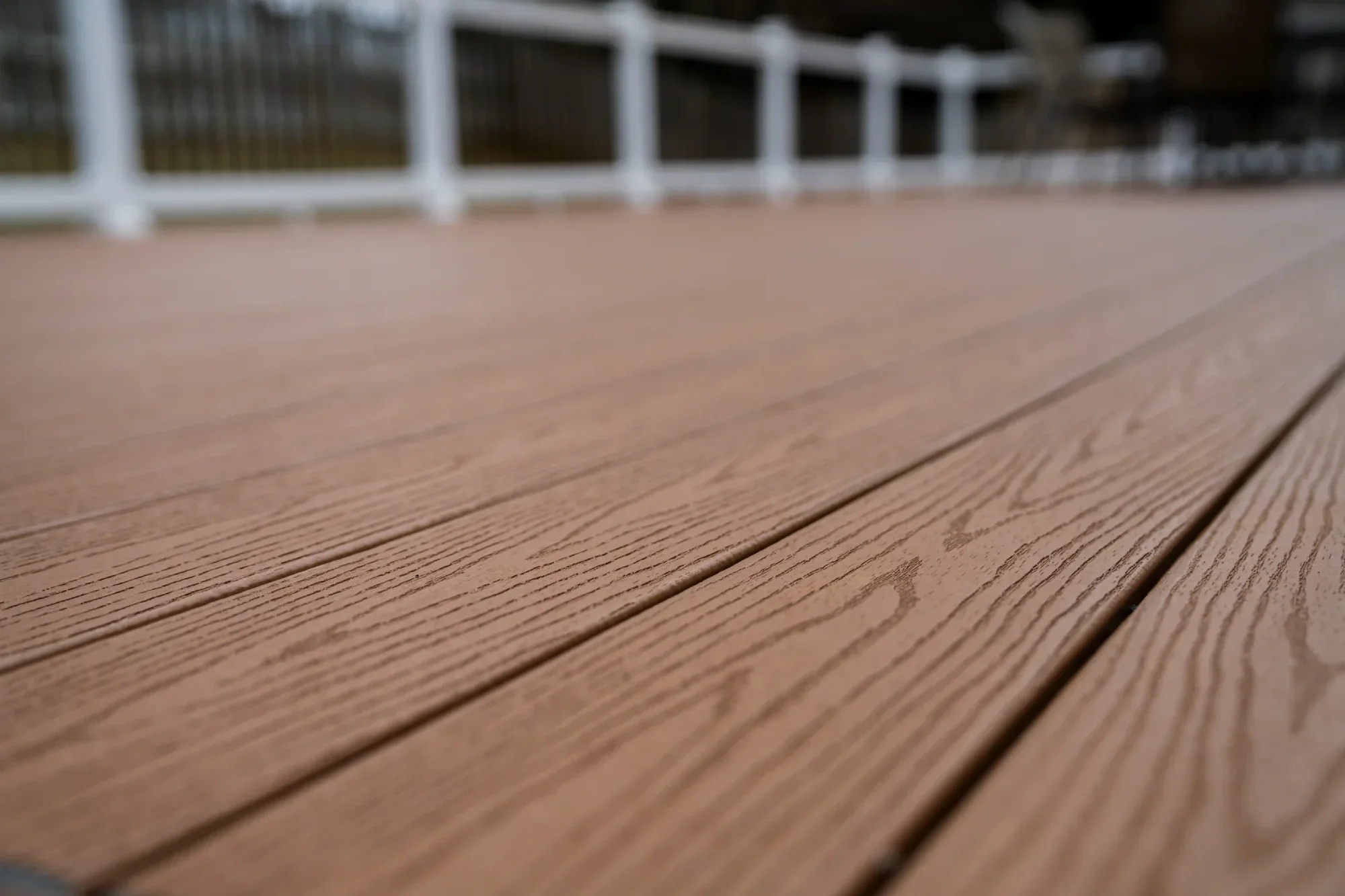
At Local Handyman Mid-South, deck board replacement in Memphis is less about swapping boards and more about stopping moisture from shortening the life of the deck all over again.
Why Deck Boards Fail Faster in Memphis
Deck boards in Memphis don’t usually fail because they’re old — they fail because they stay wet too long. High humidity, frequent rain, shaded yards, and loess soil that holds moisture after storms all work against exterior wood. When boards don’t get a full dry-out cycle, moisture stays trapped at contact points, fasteners corrode, and wood fibers begin to break down from the underside.
That’s why many decks here look fine from above but feel soft underfoot.
When Deck Board Replacement Is the Right Fix
Replacing deck boards makes sense when:
Surface boards are soft, cracked, or splintering
Fasteners are pulling loose or rusting out
Joists and framing are still structurally sound
Rot is limited to the deck surface
If framing members or ledger connections are compromised, replacing boards alone won’t solve the problem and can actually hide deeper damage.
What Gets Evaluated Before Boards Come Off
Before removing a single board, we look at how moisture moves across and under the deck:
Joist condition and spacing
Drainage and airflow beneath the deck
Areas that stay shaded or slow to dry
Existing fastener type and corrosion level
Board orientation and end-grain exposure
Skipping this evaluation is how new boards end up failing early.
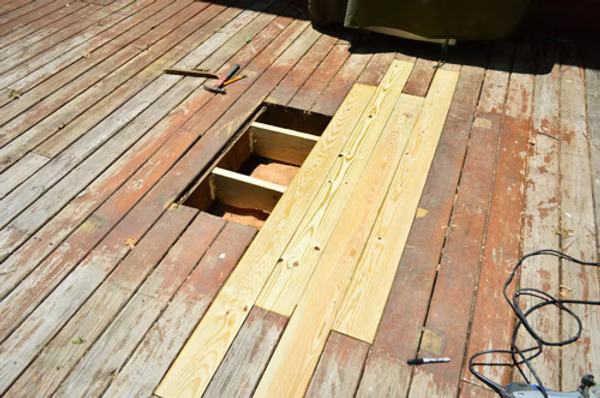
How Deck Boards Are Replaced So They Last
Our approach at Local Handyman Mid-South focuses on moisture control as much as installation.
Board Removal and Framing Inspection
Boards are removed carefully so joists can be inspected for early decay. Any soft or compromised framing is addressed before new boards are installed.
Fastener Strategy
We use corrosion-resistant fasteners rated for exterior use in humid climates. Old fastener holes that no longer hold properly are corrected instead of reused, which prevents loosening later.
Spacing for Drainage
Boards are installed with consistent spacing to allow water to drain and air to circulate. Tight spacing is one of the most common causes of early deck rot in Memphis.
End Sealing and Contact Protection
Cut ends and contact points are treated to slow moisture absorption, especially where boards meet joists and rim framing.
Final Load and Flex Check
Once boards are installed, the deck is checked for flex and movement so load is distributed evenly across the frame instead of concentrating stress in a few spots.
Where Deck Board Replacement Goes Wrong
Most premature failures come from:
Replacing boards without addressing drainage
Using interior-grade or low-quality fasteners
Installing boards too tightly together
Ignoring shaded, slow-drying sections of the deck
Covering framing issues instead of correcting them
In Memphis, moisture always finds the weakest detail.
Scope Considerations
Deck board replacement typically stays within handyman scope when framing is sound. Structural repairs, ledger replacement, or major framing changes may require licensed work depending on extent and local requirements.
What a Proper Replacement Delivers
When deck boards are replaced correctly, the surface feels solid, dries faster after rain, and ages evenly instead of rotting from hidden moisture points. The deck stays safe, stable, and predictable through Memphis wet–dry cycles.
Deck Board Replacement in Memphis — FAQs
How long should deck boards last in Memphis?
With proper spacing, fasteners, and moisture control, deck boards often last 10–20 years depending on exposure.
Why do deck boards rot from underneath first?
Moisture gets trapped between boards and framing, especially in shaded or poorly ventilated areas.
Is sealing enough to prevent deck rot?
Sealing helps, but airflow, drainage, and spacing matter just as much.
Can deck boards be replaced without rebuilding the deck?
Yes, if the underlying framing is still sound and moisture issues are addressed.
Does wood type matter in Memphis?
Yes. Pressure-treated lumber rated for ground contact performs best in local conditions.
How does Local Handyman Mid-South approach deck board replacement differently?
We focus on moisture escape, fastening strategy, and long-term durability suited to Memphis homes.
Related Guides You Might Find Helpful
Why Deck Boards Rot in Memphis
Explains why moisture usually attacks decks from below, not from the surface
Project: Rotted Deck Repair in Memphis
Shows how long humid stretches accelerate exterior wood deterioration.
Summer Humidity Damage in Memphis Homes
Shows how long humid stretches accelerate exterior wood deterioration.


© copyright 2025 All Rights Reserved. Privacy | Terms and Conditions